Does Realty Income Pay Monthly Dividends? 2026 Schedule & Dates
Yes — Realty Income Pays Every Single Month
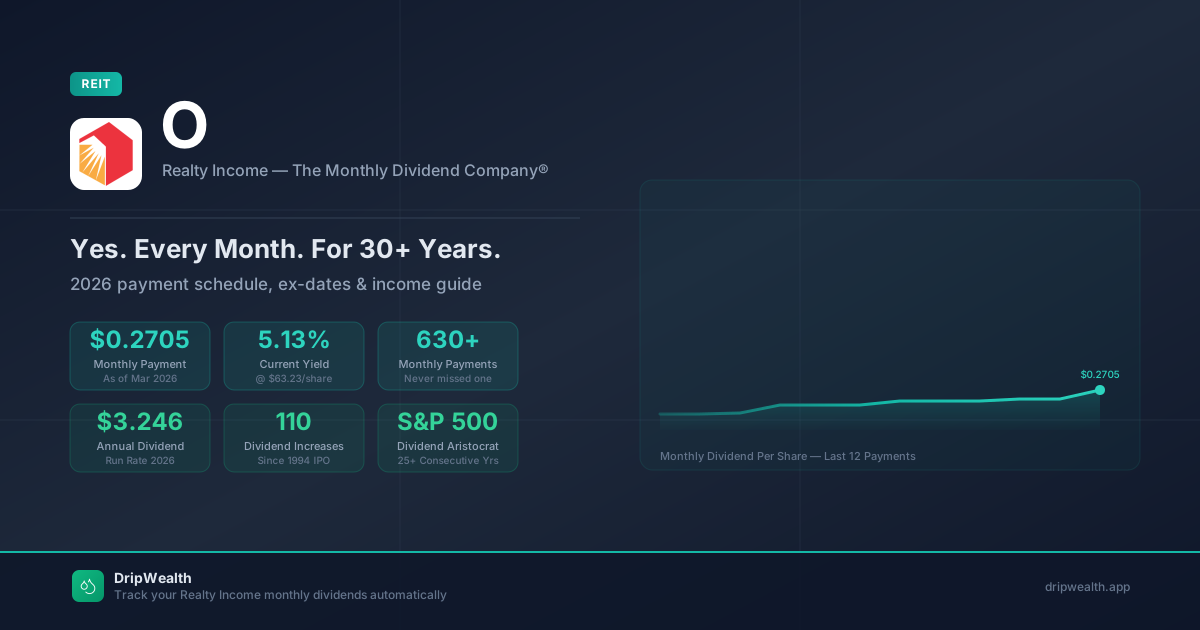
The short answer is yes: Realty Income pays a dividend every single month. Not quarterly, not semi-annually — every month, like clockwork, for over 50 years running.
As of March 2026, Realty Income has paid 630+ consecutive monthly dividends — a streak that started in 1969, well before the company went public in 1994. They've never missed a payment. They've never cut the payout. In fact, they've raised it 110 times since the IPO.
The company's self-given nickname — "The Monthly Dividend Company®" — is actually a registered trademark. Realty Income's entire brand and investor proposition is built around that monthly check. It's not marketing fluff; it's a deeply-held corporate commitment backed by 56+ years of uninterrupted payments.
Realty Income 2026 Dividend Schedule: Ex-Dates & Payment Dates
Here's the key thing investors need to understand: to receive a dividend, you must own the stock before the ex-dividend date. If you buy on or after the ex-date, you miss that month's payment and have to wait for the next one.
Realty Income typically announces each month's ex-date and payment date about 3–4 weeks in advance. The pattern is consistent: ex-date at the end of the month, payment around the 15th of the following month.
Here are the confirmed and estimated 2026 dividend dates:
| Month | Ex-Date | Record Date | Payment Date | Amount |
|---|---|---|---|---|
| January | Jan 30, 2026 | Jan 30, 2026 | Feb 13, 2026 | $0.2700 |
| February | Feb 27, 2026 | Feb 27, 2026 | Mar 13, 2026 | $0.2700 |
| March | Mar 31, 2026 | Mar 31, 2026 | Apr 15, 2026 | $0.2705 |
| April–December | ~Last business day of month | Same as ex-date | ~15th of next month | TBA (typically +0.2–0.5%) |
How ex-dates work: The ex-dividend date is the cutoff. If you buy O on January 29 (the day before the Jan 30 ex-date), you receive the February 13 payment. If you buy on January 30 or later, you miss it. You don't need to hold for any specific duration — owning the stock before the ex-date is enough.
Realty Income announces upcoming dividends about 3–4 weeks ahead. You can find the official dates on the Realty Income investor relations page or by checking your brokerage.
Track your Realty Income dividends automatically with DripWealth
Add O to DripWealth and we'll track every payout, ex-date, and yield change for you — free to start.
Realty Income Dividend History: Recent Payments
Realty Income's dividend has grown steadily. The increases aren't dramatic — typically $0.001 per share per quarter — but the consistency over decades adds up. Here's the recent monthly payment history:
| Period | Monthly Amount | Annual Total | YoY Growth |
|---|---|---|---|
| 2026 (run rate) | $0.2705 | $3.246 | +0.9% |
| 2025 | $0.264–$0.2695 | $3.217 | +2.9% |
| 2024 | $0.2565–$0.2635 | $3.126 | +1.9% |
| 2023 | $0.255–$0.2565 | $3.067 | +3.2% |
The growth rate — roughly 2–3% annually — may not look exciting. But consider: Realty Income's 5.1% yield is already well above inflation. Each small increase adds to an already high income stream, compounding meaningfully over decades.
For investors who bought O at a lower price years ago, the yield on cost is substantially higher. Someone who bought at $40/share in 2015 is now collecting $3.246 / $40 = 8.1% yield on their original investment.
How Much Monthly Income Will Realty Income Pay You?
At the current $0.2705 monthly distribution and ~$63.23 share price, here's what different investment sizes generate:
| Investment | Shares | Monthly Income | Annual Income |
|---|---|---|---|
| $5,000 | 79 | ~$21 | ~$256 |
| $10,000 | 158 | ~$43 | ~$513 |
| $25,000 | 395 | ~$107 | ~$1,282 |
| $50,000 | 791 | ~$214 | ~$2,565 |
| $100,000 | 1,581 | ~$428 | ~$5,130 |
| $250,000 | 3,953 | ~$1,070 | ~$12,824 |
To generate $500/month from Realty Income alone, you'd need approximately $117,000 invested at current prices and yield. For $1,000/month, you'd need ~$234,000. These are real numbers — not hypothetical — and they don't include dividend reinvestment.
If you reinvest dividends (DRIP), your share count grows each month, which means your income grows even if the dividend per share stays flat. Over 10–20 years, that compounding adds up significantly.
Realty Income vs Other Monthly Dividend REITs
Realty Income isn't the only REIT that pays monthly, but it's the most recognized. Here's how it compares with other popular monthly payers:
| REIT | Ticker | Yield (Approx.) | Frequency | Property Type |
|---|---|---|---|---|
| Realty Income | O | 5.1% | Monthly | Net Lease (retail, industrial) |
| NNN REIT | NNN | ~5.5% | Quarterly | Net Lease (retail) |
| STAG Industrial | STAG | ~3.9% | Monthly | Industrial / Warehouses |
| VICI Properties | VICI | ~5.4% | Quarterly | Gaming / Entertainment |
| Main Street Capital | MAIN | ~6.0% | Monthly | BDC (private loans) |
Realty Income's combination of monthly payments, S&P 500 Dividend Aristocrat status, and 56+ year track record is hard to match. STAG offers industrial exposure with monthly payments at a lower yield. MAIN offers higher yield but is a BDC, not a REIT.
For a comprehensive list of REITs and ETFs that pay monthly, see our best monthly dividend REITs guide.
Is Realty Income's Monthly Dividend Safe?
Three factors make Realty Income's dividend among the most secure in the market:
1. Triple-net leases remove operating costs. Realty Income's tenants pay property taxes, insurance, and maintenance — not Realty Income. This predictable, low-cost structure is why the dividend is so reliable.
2. Tenant diversification across 90+ industries. Over 15,400 properties, 1,500+ clients, in 89 industries and 7 countries. No single tenant represents more than ~3.4% of revenue (7-Eleven is the largest). One retailer going bankrupt barely registers.
3. AFFO payout ratio stays conservative. REITs use AFFO (Adjusted Funds from Operations) rather than earnings to measure dividend coverage. Realty Income targets an AFFO payout ratio of roughly 75%, meaning it retains meaningful cash flow for growth even after paying dividends.
Bottom line: Realty Income has never cut its dividend. Not during the 2008 financial crisis. Not during the COVID-19 pandemic. Not during any economic downturn since 1969. The payout structure is designed specifically to be sustainable through economic cycles.
The main risk to the dividend isn't a cut — it's slow growth. If interest rates stay high, Realty Income's cost of capital rises, which can slow acquisition growth and limit dividend increases to the current 2–3% annual pace. That's still a growing income stream, but investors expecting rapid dividend growth may be disappointed.
Start Collecting Realty Income's Monthly Dividends
Realty Income trades on the NYSE under the ticker O. You can buy shares through any brokerage — Fidelity, Schwab, Robinhood, Vanguard, or others. The low share price (~$63) makes it accessible at nearly any investment size.
Here's the practical checklist for new O investors:
- Buy before the ex-date. Check the current ex-date (usually last business day of the month) and buy at least one day before it to qualify for that month's payment.
- Enable DRIP if you're in accumulation mode. Automatic reinvestment compounds your share count every month without you doing anything.
- Track your income. Use DripWealth to see all your incoming dividends — including O's monthly payments — in one dashboard alongside your portfolio holdings and goals.
- Set a goal. Know what monthly income target you're working toward. For most investors, a $500–$1,000/month dividend income goal is a meaningful milestone. DripWealth's FI Journey tool lets you map the path there.
The Realty Income playbook is simple: buy shares, get paid every month, reinvest if you're building wealth, spend the income if you need it. Over 630 consecutive monthly payments say the system works.